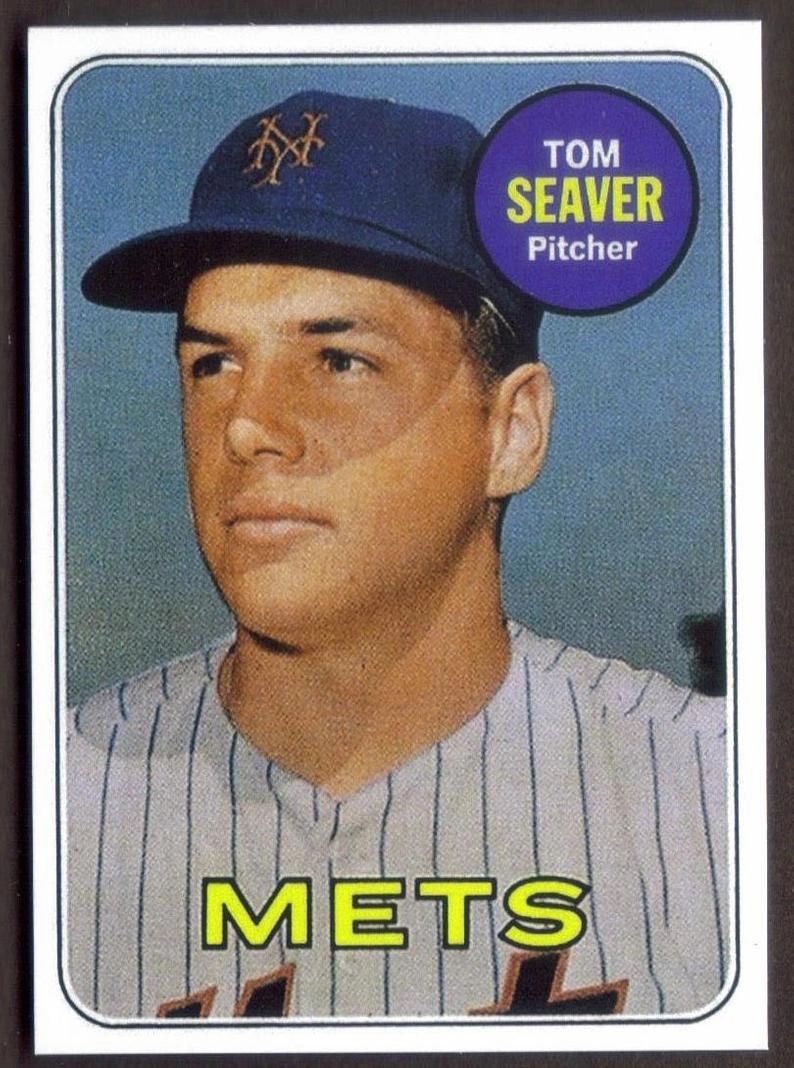
In 1969, Tom Seaver went 25-7 for the Miracle Mets, sporting an ERA of 2.21, WHIP of 1.039 and 208 strikeouts in 273.1 innings. He won the Cy Young Award that year almost unanimously, with a lone vote going to Phil Niekro (23-13, 2.56 ERA, 1.027 WHIP, 193 K’s in 284.1 innings). Seaver led the league in wins; combined with a 9-0 record in his last 10 starts, that was enough to give him the award. I don’t think either one of them should have gotten it; at first glance, it should have been Juan Marichal. Marichal went 21-11 and led the league with 2.10 ERA, .994 WHIP and 8 shutouts, and had only three fewer strikeouts than Seaver. A strong case can be made for Marichal based on his superior pitching stats, but he lacked the wins that Seaver had.
Bill James has put forth Bob Gibson as the deserving winner of the Cy Young Award for that year. Gibson went 20-13 with a 2.18 ERA, 1.102 WHIP and 269 strikeouts in 314 innings. Gibson also led the league in Fielding Independent Pitching (FIP), with 2.30. James, in his 2017 article “Luck, and the Cy Young Award”, uses a Deserved Record formula. He calculates a record of 21-11 for Seaver and 25-11 for Gibson, and suggests Seaver won the Award by good luck and Gibson lost it by bad luck.
I believe the Cy Young Award should be given for being the most dominant pitcher out there. The guy who goes out and controls his interactions with the opposing batters better than anyone else. So in my mind, things like ERA, Strikeouts and WHIP, and more advanced metrics like FIP, have a lot of value. A pitcher's won/loss record is heavily dependent on run support, the team's relief corps and other factors. For example, Seaver was supported by 47 runs over his last 10 starts, while both Marichal and Gibson were supported by 33 runs. Marichal went 8-2 in his last 10 starts, and Gibson went 5-5. Give Seaver the level of support that Marichal and Gibson had, and his record would likely have suffered. Of course, winning games is very important and must also be factored in. I tend to leave out postseason performance and how you do in the stretch run; the latter is more important for Most Valuable Player, and I don't believe the former should enter into the conversation at all. A win is a win, no matter whether it occurs in June or September.
The history of the award provides no guidance in how to determine the winner, merely stating the award should go to the most outstanding pitcher. That is a very difficult thing to estimate, of course. How do you combine all the information on a pitcher's season into a single, imprecise measure of "value"?
It is a burden to be overcome (happily) here at Retrotisserie Baseball!
Using the metrics employed in fantasy baseball, we assign point values to wins, saves, strikeouts, ERA and WHIP. For the first three, each win (or save, or strikeout) gets a marginal value. The more you have, the more points you get. For ERA and WHIP, marginal points are assigned based on how many fewer earned runs (or baserunners) the pitcher allowed compared to the “average” pitcher in the league, calculated over the number of innings pitched. Here, if you’re better than average, more innings provides more points. We can thus rate each of the pitchers mentioned above. Seaver ends up with 9.03 Retrotisserie Points (RPs), with more than half (4.79) in wins. Marichal has 8.47 RPs, Niekro has 8.21 and Gibson (hurt by his much higher WHIP relative to the league average) ends up with 7.46. By this measure, I was surprised that Marichal fell short of Seaver, but the extra wins were the difference.
There is another contender, not mentioned in the voting or any article I could find. This pitcher did not lead the league in any category, but performed well enough in each category to overcome Seaver’s extra victories.
I'm going to throw Bill Singer's name out there.
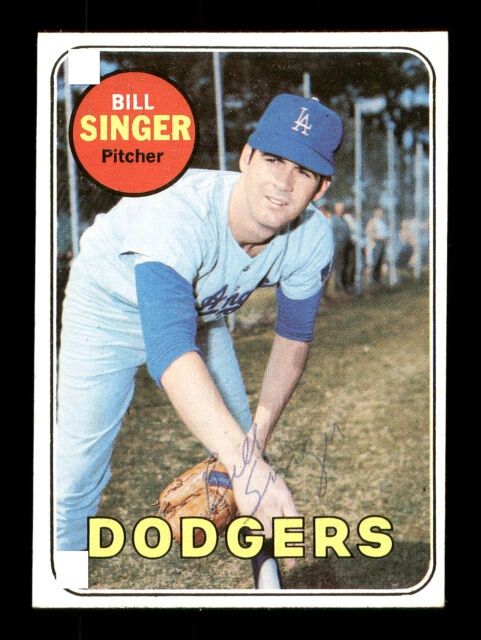
Singer had a great year in 1969, going 20-12, with career bests in ERA (2.34), WHIP (1.007) and strikeouts (247). He threw over 315 innings that year, over 40 more than Seaver, with a better WHIP and more strikeouts. He had better numbers than Niekro in every category except for wins (I’ve already given my theory on wins). He had as many wins as Gibson, with almost as many strikeouts, a .16 difference in ERA (6 more earned runs allowed over the entire season with comparable innings), and allowed almost 1 fewer runner on base than Gibson for every nine innings pitched. Singer’s RP score under my system was 9.17, slightly edging out Seaver for the top spot. Under my system, a save was worth 0.17 points. Singer’s one save made all the difference! Of all the pitchers mentioned, Singer also received the least amount of run support from the offense over his last 10 starts, with only 32 runs.
Having said all of that, one of the great things about Retrotisserie Baseball is that you don’t have to choose one pitcher who is the most outstanding. Just like a Major League Baseball team, you need a balanced roster of complimentary players to bring home the championship.