The inspiration for Retrotisserie Baseball came from two of my friends, Stuart Gelbwasser and Kevin Brazee.
Blog
News, strategy, and updates from Retrotisserie Baseball.
What's Old Is New Again
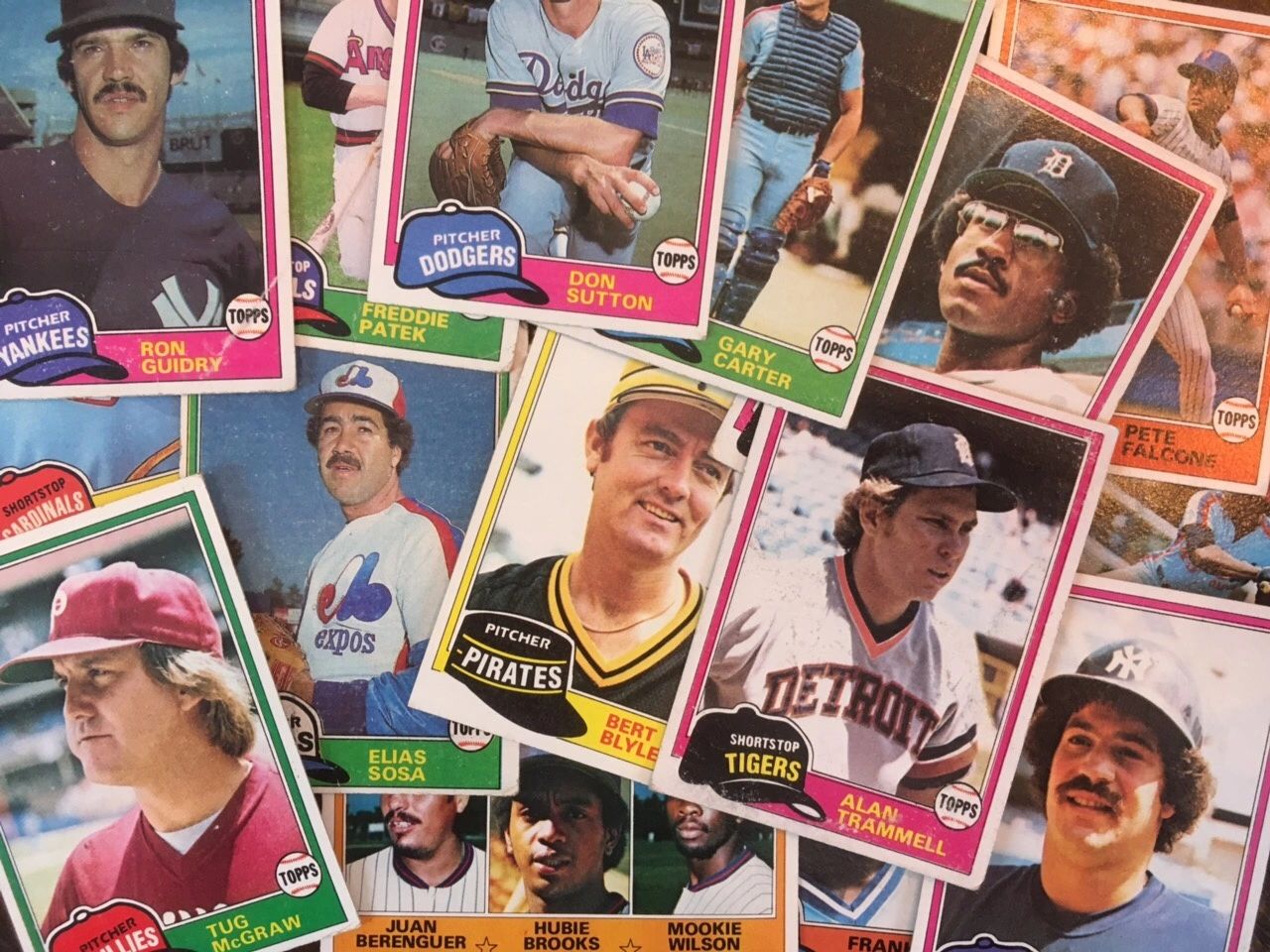
Continue Reading →I recently read an article that referenced the old Stratomatic Baseball Game. I had to smile. I grew up playing this game and still love it! I have the entire 1986 season. Good times! I have the memories of games from days gone by- both the actual game and the Stratomatic games played in the living room with family and friends.
Catcher Offensive Production
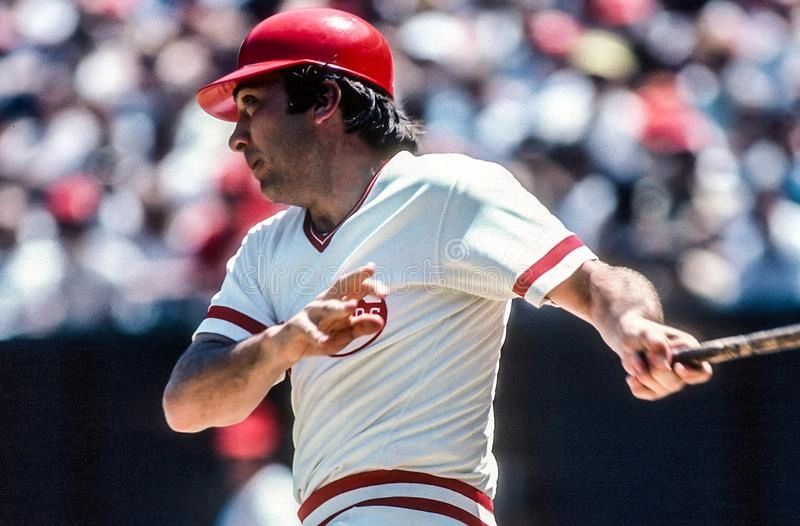
Continue Reading →It might surprise absolutely nobody that the 1970’s featured the best offensive production from the catcher position, relative to total offense, over the period from 1900 to 2019. With the exception of 1973 and 1976, catcher offense (as measured by OPS) exceeded the league average in each year. And the three year average offense (here at Retrotisserie Baseball, we like to do things in threes!) for catchers exceeded the league average in every single year. Led by the Little General, Carlton Fisk, Ted Simmons and others, catchers outperformed the league by .027 points (.713 vs. .686) between 1970 and 1972 and .014 (.734 vs. .720) between 1977 and 1979.
A new look at the 1969 NL Cy Young Award
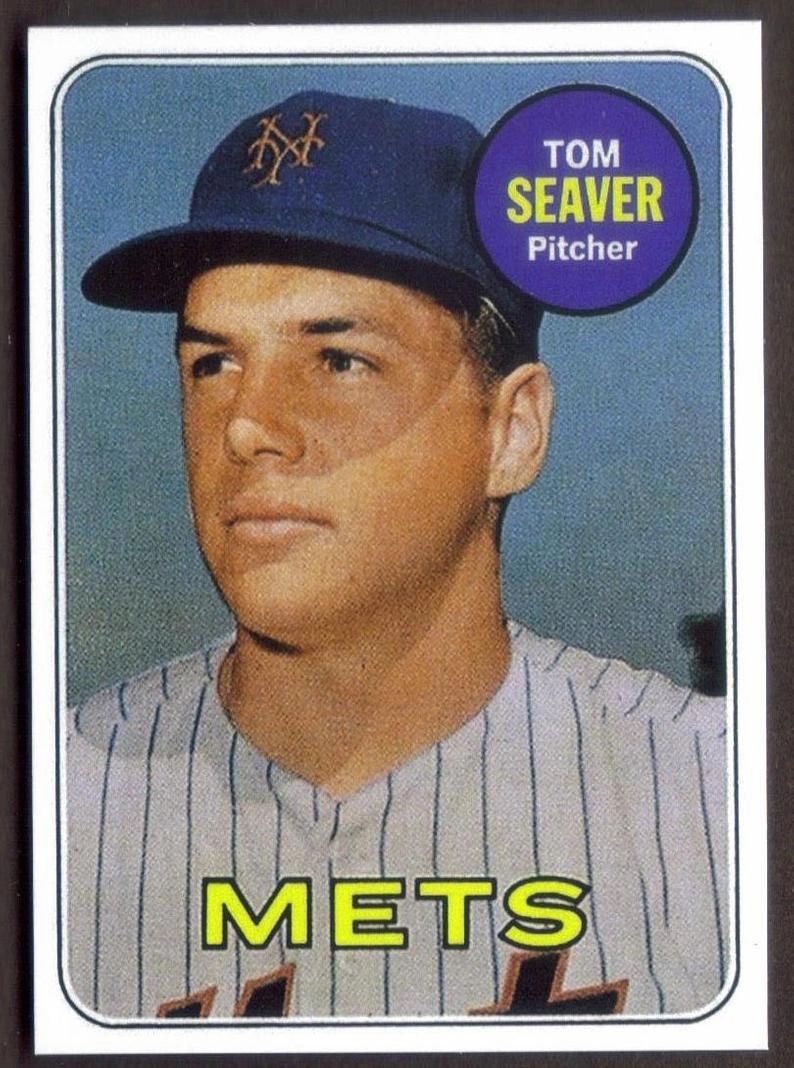
Continue Reading →In 1969, Tom Seaver went 25-7 for the Miracle Mets, sporting an ERA of 2.21, WHIP of 1.039 and 208 strikeouts in 273.1 innings. He won the Cy Young Award that year almost unanimously, with a lone vote going to Phil Niekro (23-13, 2.56 ERA, 1.027 WHIP, 193 K’s in 284.1 innings). Seaver led the league in wins; combined with a 9-0 record in his last 10 starts, that was enough to give him the award. I don’t think either one of them should have gotten it; at first glance, it should have been Juan Marichal. Marichal went 21-11 and led the league with 2.10 ERA, .994 WHIP and 8 shutouts, and had only three fewer strikeouts than Seaver. A strong case can be made for Marichal based on his superior pitching stats, but he lacked the wins that Seaver had.
The second coming of Sandy Koufax
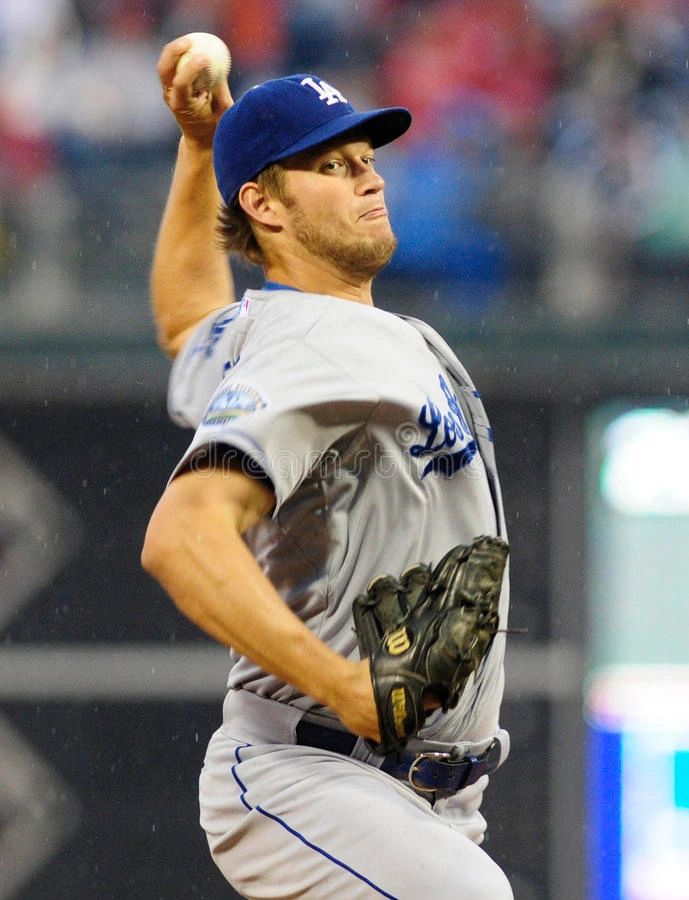
Continue Reading →I saw someone say that Clayton Kershaw is tremendously overrated and people need to stop comparing him to Sandy Koufax. It's true, the two can't be compared - The Claw has two inches and 15 lbs on Koufax. :-)
Rotator Cuff All-Stars
Continue Reading →When Steve Busby went under the knife in July 1976 to repair a torn rotator cuff, it was the first time the surgery had been performed on an active pitcher. Like most pitchers, he never fully recovered from the injury. After winning 56 games in his first three full seasons in the majors, and an all-star for two of them, he won only eight more games over the rest of his career.
1970's Run Production Efficiency
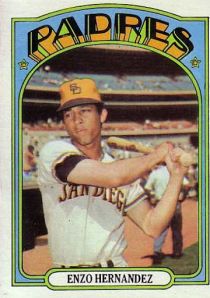
Continue Reading →I was recently made aware of a record-tying season in 1971 by Enzo Hernandez, in which he drove in only 12 runs. Only one other regular player has driven in so few runs in a season, Goat Anderson in 1907. Enzo holds the record for fewest RBI with the most at-bats, and is also the only regular to accomplish this since the end of the dead-ball era.
Least productive seasons in MLB history
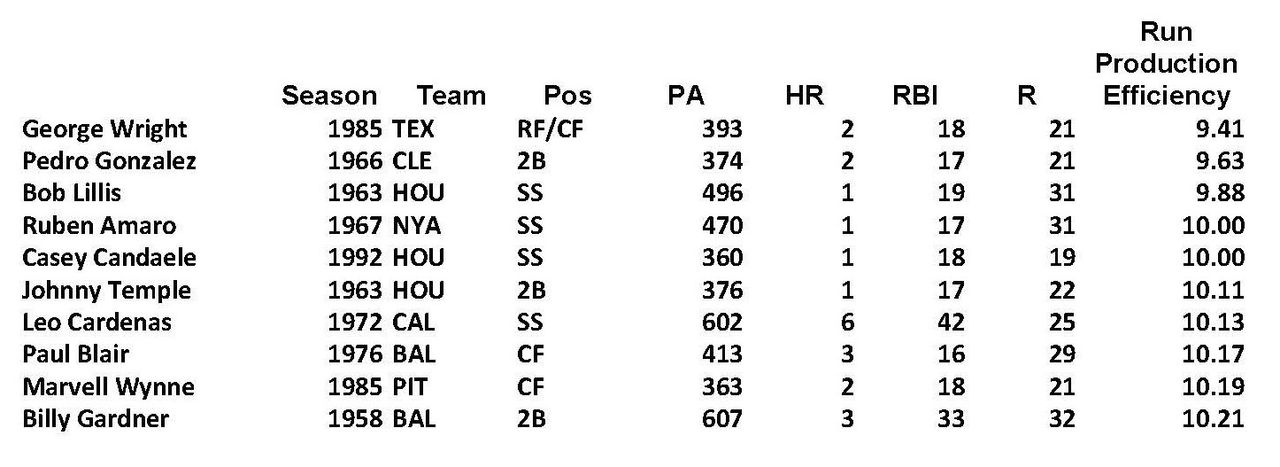
Continue Reading →Last week I shared a little analysis about Enzo Hernandez and his record-tying 12-RBI season. I explained that it wasn't quite as bad as it looked, because he also scored 58 runs, so he definitely made a contribution on offense. Today, I want to look at the least productive seasons in baseball history for lineup regulars.
First Ballot Hall of Famer
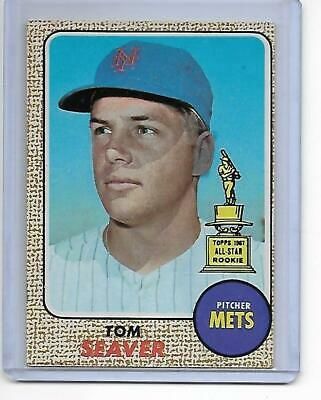
Continue Reading →1992 was the first Hall of Fame vote I was old enough to fully appreciate and have an informed opinion about. Tom Seaver headlined that freshman class, and it would have been all kinds of crazy if he had not been voted in. I imagine the same could have been true even earlier, if guys like Ernie Banks, Willie Stargell, Johnny Bench and Yaz hadn’t gotten in on the first ballot, but I didn’t see those guys in their prime. I acknowledge that there are many, many great players who didn’t get in immediately, and that always surprised me when I either learned about it for players before my time, or witnessed it myself. In my mind, it should be very easy to determine whether a guy belongs when he is first eligible, but that is just my opinion. I don’t believe writers (and fans) should vote based on whether a guy is worthy of being a “First Ballot Hall of Famer”, but I suspect they do. Either you did enough on the field to be in the Hall of Fame, or you didn’t. It should not be so difficult that a guy has to wait 20 years after retirement, or even 10, to make that determination.
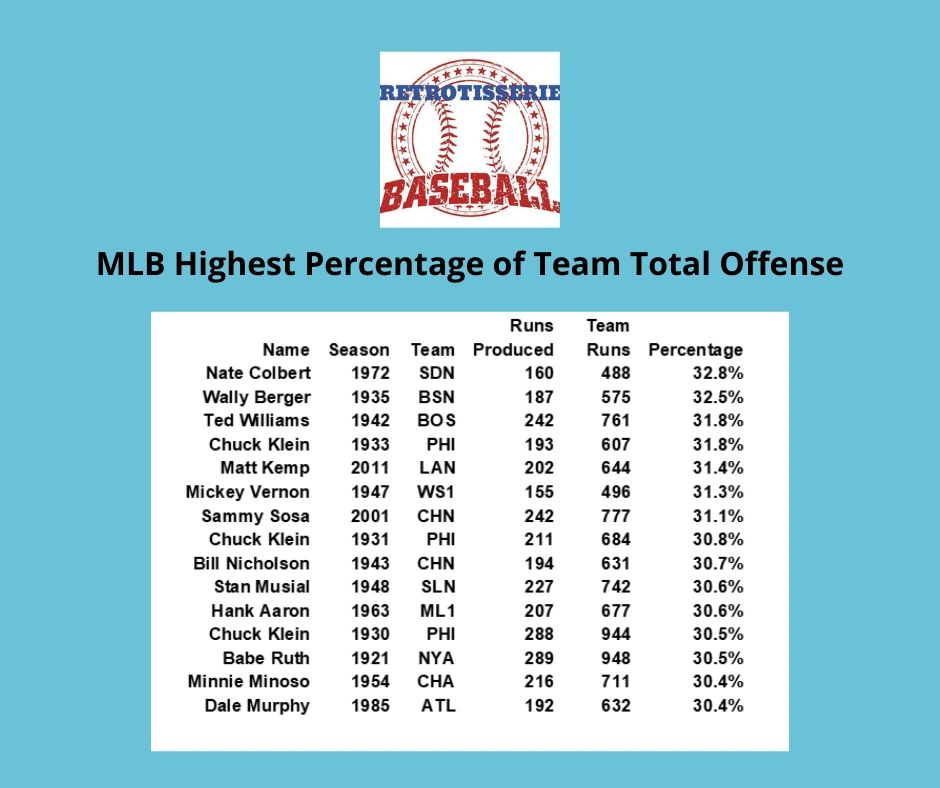
Highest Percent of Team Total Offense
Continue Reading →In honor of Nate Colbert’s 75th birthday on April 9, 2021, I shared a record he set in 1972.